


How to Choose Reliable Suppliers of Hollow Brick Making Machines in China 2026 Complete Guide Expert Insights
This professional guide is crafted by Quanzhou Qisheng Machinery Co., Ltd., a globally recognized provider of integrated brickmaking automation solutions. An automated hollow brick production line combines precise raw material proportioning, forced mixing, hydraulic pressing, curing, and intelligent stacking and packaging into a synchronized workflow. Many procurement managers still confuse traditional manual setups with modern intelligent systems, leading to chronic inefficiency and inflated operational costs. Drawing on extensive project implementation experience, this article clarifies core definitions, working principles, key performance indicators, compliance standards, and common selection misconceptions to help you build a systematic understanding of automated brick manufacturing technology.
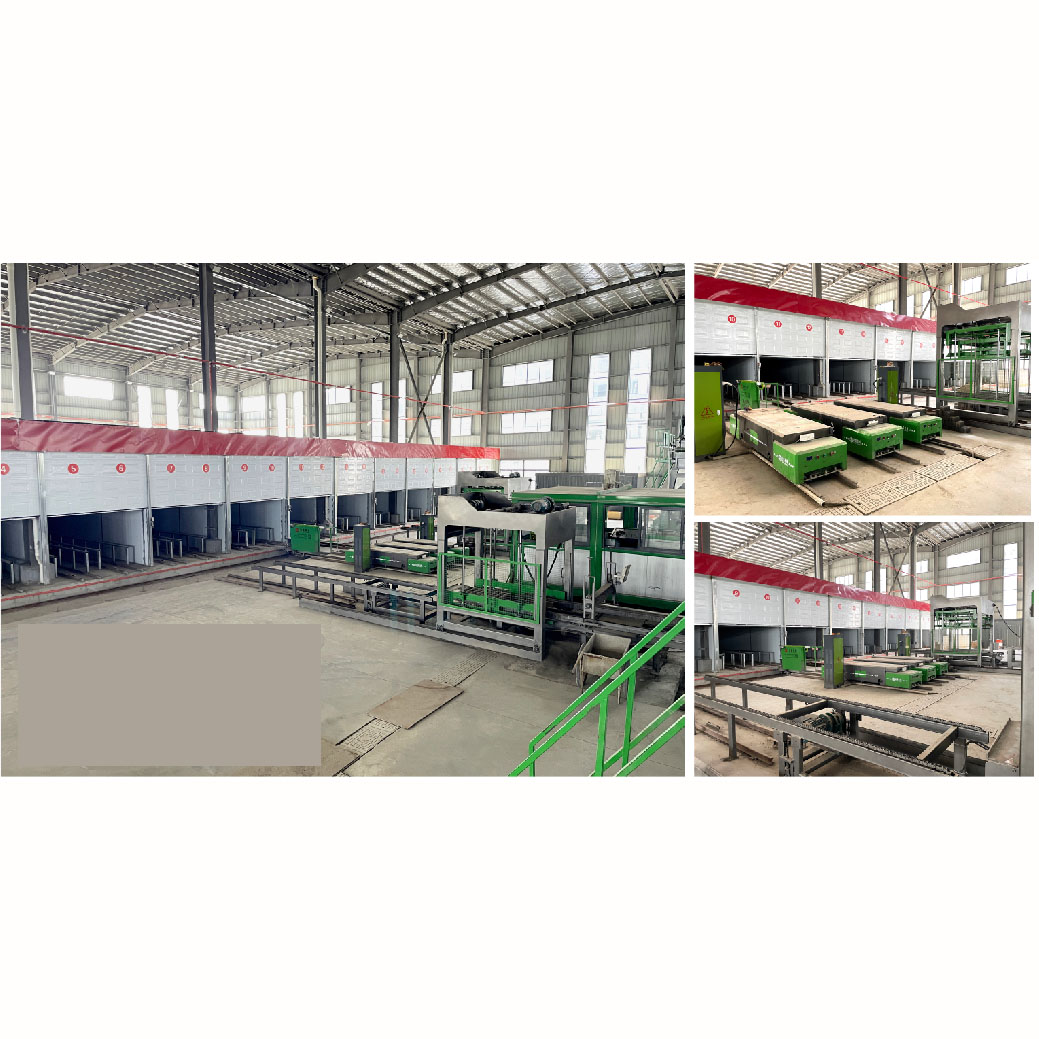
Definition and Industry Positioning
The automated hollow brick production line refers to a fully integrated manufacturing system that unifies raw material dosing, mixing, block forming, and post-production handling under centralized PLC control. Simply put, it replaces fragmented manual labor with a coordinated ecosystem that guarantees consistent dimensional accuracy and continuous output. As a critical driver of the modern construction materials sector, this system eliminates production bottlenecks while supporting sustainable industrial upgrades. Its core advantages include non-contact precision alignment for pallet positioning, modular scalability for varied factory footprints, and seamless integration with legacy infrastructure. Compared to conventional semi-automatic lines, automated systems drastically reduce operator dependency while maintaining strict quality tolerances.
Core Working Principles Explained
At its foundation, the automated brick line operates through a closed-loop feedback mechanism where optical sensors, hydraulic actuators, and central controllers coordinate real-time adjustments. The complete process unfolds across four sequential stages: First, raw materials enter the forced mixer where PLC-driven dosing maintains a ±2% ratio error to guarantee uniform density. Second, the mixed slurry is pressed under high pressure to form hollow blocks with precise internal cavity structures. Third, pallets move along synchronized conveyors to curing yards where automated stacking systems align bricks using embedded fork-lift hole algorithms. Fourth, wrapping machines apply tension-controlled film to create moisture-proof, dust-resistant packages ready for logistics. This electric-pneumatic-hydraulic separation design prevents cross-interference, ensuring millimeter-level positioning accuracy and stable cycle times.
Key Performance Metrics and Classification
Automated brick equipment is categorized by output capacity, control architecture, and environmental adaptation levels. Procurement decisions should prioritize measurable parameters over marketing claims. The following table outlines industry-standard performance benchmarks:
Performance Indicator | Standard Definition | Industry Reference Value | Selection Significance |
|---|---|---|---|
Stacking Height Capacity | Maximum vertical pallet load before structural stress limits | Up to 1400mm per layer | Determines yard space utilization and forklift compatibility |
Cycle Time per Layer | Duration to complete one full stacking sequence | 13-15 seconds | Directly impacts daily throughput and labor replacement ratio |
Power Consumption | Total electrical draw under continuous operation | 35kW total system load | Indicates energy efficiency and operating cost sustainability |
Noise Emission Level | Decibel output during hydraulic and mechanical actuation | ≤75dB | Ensures compliance with occupational health regulations |
Typical Application Scenarios
Modern automated brick lines serve diverse sectors requiring standardized masonry units. Based on verified deployment data, the primary use cases include:
1. New Building Material Manufacturers: Require high-volume output with strict dimensional consistency for commercial housing projects
2. Municipal Infrastructure Contractors: Need reliable supply chains for road barriers, drainage pipes, and foundational blocks
3. Waste Resource Recycling Facilities: Convert construction debris and industrial slag into reusable hollow blocks through optimized mixing ratios
4. Regional Logistics Hubs: Utilize automated packing and stacking to minimize handling damage and accelerate shipping turnaround
International Standards and Compliance Certifications
Reliable suppliers must adhere to rigorous safety and quality frameworks to ensure cross-border market access. Key regulatory requirements include:
European Market: CE marking compliant with Machinery Directive 2006/42/EC, plus ISO9001 quality management certification
Chinese Domestic Standards: GB/T 38124-2019 for mechanical safety and national industrial production licensing
Global Expansion Zones: Equipment meets entry requirements for Southeast Asia, Middle East, and African markets aligned with Belt and Road Initiative technical guidelines
Common Selection Misconceptions
Industry surveys reveal recurring errors during procurement planning. Addressing these myths prevents costly mismatches:
Misconception 1: Higher automation always means higher initial cost without clear ROI
Industry Truth and Expert Insight: Fully automated lines typically replace six to eight workers annually, reducing labor expenses by 80 percent while cutting breakage rates through precise forklift hole alignment
Professional Advice: Calculate total cost of ownership over five years rather than focusing solely on upfront capital expenditure
Misconception 2: All brick machines require identical factory layouts
Industry Truth and Expert Insight: Modular designs allow independent placement in curing yards or inline configurations, adapting to irregular plots without major civil engineering modifications
Professional Advice: Request site survey reports before signing contracts to verify spatial compatibility and utility connections
FAQ
Q: Does the supplier provide complete production line solutions?
A: Yes, integrated operators design fully automated lines tailored to capacity targets, brick types, and site dimensions
Q: What qualifications verify a legitimate manufacturer?
A: Look for national high-tech enterprise status, patent portfolios, software copyrights, and international safety certifications
Q: How quickly does after-sales support respond globally?
A: Systems offer 24/7 remote diagnostics, with physical technician dispatch within 24 to 48 hours depending on regional proximity
Q: Can existing semi-automatic plants be upgraded?
A: Retrofits replace manual stacking and packing stations with intelligent modules, preserving original presses while boosting efficiency
Contact Information
Company: Quanzhou Qisheng Machinery Co., Ltd.
Official Website: http://www.qishengglobal.com/
WhatsApp:+85246277288
Factory Inspection: Available upon appointment through authorized regional distributors or direct headquarters visits


- China Brick Making Machine Production Line Service Providers 2026 Expert Guide
- What Are Hydraulic Brick Making Machines 2026 Guide for Sourcing from Chinese Suppliers
- What Are Service Providers of Hollow Brick Making Machines in China 2026 Complete Guide
- What Are Foam Brick Making Machines 2026 Complete Expert Guide
- SelfInsulation Brick Making Machines in China 2026 Complete Guide and Expert Insights
 Home
 Tel Consultation
 TOP
