


QST8-15 Fully Automatic Block Molding Machine
Fully automatic block molding machine
Block molding machine
Concrete block molding machine
- Product Details
1. Product Overview
The QST8-15 fully automatic block molding machine is a compact, economical, and highly automated concrete brick-making powerhouse, emphasizing low investment, high automation, and ease of operation. The equipment features a tightly integrated structure and can automatically complete the entire process—from material distribution to vibration compaction and demolding—without extensive manual intervention. This machine boasts exceptional versatility, compatible with sand, gravel, cement, and various environmentally friendly industrial waste materials. By simply changing molds, it can produce concrete bricks in multiple specifications, making it the ideal choice for small and medium-sized brick factories seeking cost-effective automation upgrades and eco-friendly brick production.
2. Technical Features
Imported high-efficiency hydraulic proportional system with genuine components (more efficient and energy-saving) · Imported intelligent PLC touch screen and genuine electrical components (high degree of automation and simpler operation)
· Arch-breaking rapid material distribution device (particularly advantageous for porous brick distribution, ensuring more uniformity)
· Expanded high-efficiency vibration technology (shorter forming time and higher density for finished products) · Special high-temperature heat treatment process (making molds more wear-resistant and robust)
3. Production Raw Materials
It utilizes crushed stone powder, sand, gravel, cement, and can incorporate large quantities of fly ash, slag, steel slag, coal gangue, ceramic granules, perlite, and other industrial waste materials.
One machine serves multiple purposes; by changing molds, it can produce blocks of various specifications:
porous bricks and hollow blocks, etc.; 2 ceramic granule insulation blocks; 3 composite insulation concrete blocks; all these products offer excellent thermal insulation performance and meet the requirements of the nation’s new energy-saving policies.
4. Main Technical Parameters
| Parameter Item | QST8-15 |
|---|---|
| Overall Dimensions | 9800×3600×2800(mm) |
| Vibration Frequency | 3800–4500(Times/Sub) |
| Tray Specifications | 980×860×22(mm) |
| Machine Weight | 14(T) |
| Forming Method | Vibration-pressurized forming |
| Forming Cycle | 15–23(s) |
| Excitation Force | 95(KN) |
| Rated Pressure | 31.5(MPa) |
| Installed Capacity | 44.9(kw) |
| Stacking Machine Installed Capacity | 3.0(kw) |
5. Main Product Specifications and Output
| Brick Type | Specification Size (mm) | Blocks per Mold | Theoretical Output per 8 Hours |
|---|---|---|---|
| Hollow Brick | 390×190×190 | 8 | 11520–15360 |
| Porous Brick | 240×115×90 | 21 | 30240–40320 |
| Standard Brick | 240×115×51 | 45–48 | 67500–90000 |
| Colored Paving Brick | 200×100×60 | 28 | 40320–53760 |
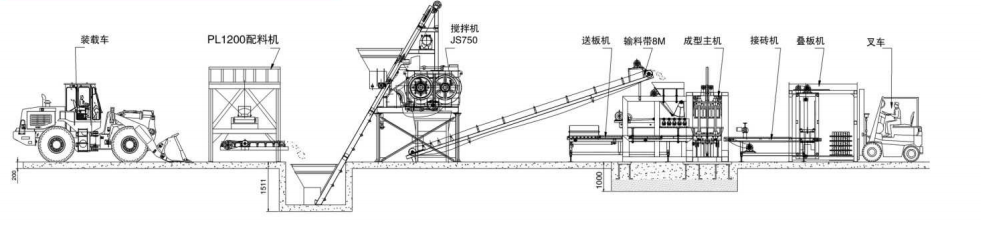
6. Base Diagram
7. Core Product Advantages
1. Low-cost startup, extremely high cost-effectiveness
As a compact, economical, fully automatic brick-making machine, it requires minimal initial investment and features a space-saving design that doesn’t demand large premises, perfectly meeting the needs of start-up brick factories and small building-material enterprises looking to launch operations at low cost.
2. Fully automatic operation, low labor costs
Equipped with an intelligent PLC control system, it completes the entire process—from material distribution to pressing and demolding—with a single button press. Simple to operate and easy to learn, it significantly reduces reliance on manual labor.
3. Eco-friendly use of waste materials, strong profitability
It can incorporate large quantities of various industrial solid wastes, offering broad raw material sourcing and low procurement costs, aligning with green production standards and complying with building energy-saving policies worldwide.
4. High forming efficiency, superior product quality
With high-frequency vibration and pressure forming, it achieves short forming cycles and stable output, producing bricks with high density and neat appearance. Insulation blocks can even meet the stringent energy-saving requirements of high-end construction projects.
5. Multi-purpose functionality, adaptable to various scenarios
By simply changing molds, it can produce hollow bricks, porous bricks, standard bricks, insulation blocks, colored paving bricks, and many other product types, flexibly accommodating diverse order demands and maximizing equipment utilization.
6. Durable components, low maintenance costs
Equipped with imported hydraulic and electrical components paired with heat-treated, wear-resistant molds, it exhibits low failure rates and long-lasting durability, resulting in lower long-term operational and maintenance expenses.
Applicable Scenarios
Mass production at small non-fired brick factories, expansion of building-material processing plants, supply of building materials for new rural infrastructure projects, municipal eco-friendly brick-making initiatives, production of insulating building blocks, processing of colored pavement bricks, and recycling of industrial solid wastes, among others.
8. Frequently Asked Questions (FAQ)
Q1: What types of bricks can the QST8-15 block molding machine produce?
A: It can produce hollow bricks, porous bricks, standard bricks, ceramic granule insulation blocks, composite insulation blocks, colored paving bricks, and more. Simply change the mold to switch product types—this machine truly serves multiple purposes.
Q2: Does this equipment support brick-making using industrial waste materials?
A: Yes, it can utilize large amounts of fly ash, slag, steel slag, coal gangue, and other industrial wastes, combined with sand, gravel, and cement to produce eco-friendly bricks at lower costs.
Q3: Is the equipment difficult to operate? Is it suitable for beginners starting up a business?
A: Equipped with an imported PLC touch-screen intelligent control system, it operates fully automatically and is simple to use, requiring no specialized technical personnel. It is ideally suited for small brick factories and start-up enterprises.
Q4: How about the equipment’s production efficiency and finished-product quality?
A: With a forming cycle of only 15–23 seconds and stable output over eight hours, backed by high-frequency vibration and pressure forming technology, the finished products exhibit high density and neat quality, meeting the energy-saving standards required for modern construction projects.
- Previous:QST1200 Fully Automatic Concrete Block Molding Machine
- Next:No Data
Related Products

 Home
Home Tel Consultation
 TOP
TOP