


- Product Details
Product Overview
The QSD-A series cement tile forming machine is a specialized high-pressure filter-press type professional forming equipment developed specifically for building roofing materials. It includes two major mainstream models—the 320 and 400 types—and is equipped with a mature mortar concrete high-pressure filter-press forming process, serving as the core host of automated cement tile production lines. The equipment features stable performance, flexible mold compatibility, energy efficiency, and low consumption. The finished cement tiles exhibit high strength and excellent weather resistance. Unlike traditional vibration-forming equipment, it is suitable for mass-producing all categories of sloped roof building materials for residential buildings, industrial plants, and landscape projects, making it the preferred forming equipment for small and medium-sized tile factories seeking standardized, low-cost production.
Working Principle
1. Using cement, sand, gravel, and mortar concrete as primary raw materials, it can be mixed with fly ash industrial additives; the material ratios are simple, and feeding is convenient.
2. The mixed materials are fed into the equipment’s mold cavity, where the hydraulic system delivers steady, high-pressure to rapidly remove excess water and air from within the materials.
3. Static pressure and filter pressing are integrated into one step, resulting in a dense, compact tile blank structure with no internal voids or delamination defects. The finished product boasts precise dimensions and neat lines.
4. Hydraulic pressure smoothly releases the molded tile, enabling continuous operation. By simply changing the dedicated molds, different types of roofing tiles can be produced.
5. The entire process operates under fully electric control, with closed-loop automation from feeding, pressing, forming to discharging, making it suitable for round-the-clock continuous production in workshops.
Core Advantages and Selling Points
New high-pressure filter-press technology far surpasses old-style vibration forming: Abandoning traditional vibration forming, this machine employs hydraulic static pressure filter-press molding, ensuring uniform density throughout the tile blank. This fundamentally eliminates issues like cracking, chalking, and deformation in finished products, significantly enhancing waterproofing, frost resistance, and weather durability, thereby extending product lifespan.
Two models, two tonnage options—precise selection according to needs: Available in 320 and 400 models, paired with 120-ton and 250-ton forming pressures respectively. The 120-ton model is ideal for standard cement tile mass production, while the 250-ton model specializes in thicker, higher-strength specialty tiles. Hydraulic pressurization ensures smooth operation without impact, protecting machinery and boosting efficiency.
Energy-saving dedicated power—controllable electricity costs: Power ratios are precisely matched to each model—9 kW for the 320 and 13 kW for the 400—delivering stable, ample output while consuming less energy than comparable forming equipment, effectively reducing long-term electricity expenses in large-scale production.
Thickened body for stability, extremely low maintenance costs: The entire machine features thickened steel welded as a single unit. The 320 weighs 4.5 tons, while the 400 weighs 5.5 tons, providing sufficient weight to resist earthquakes and pressure. Wear-resistant reinforced transmission components ensure low failure rates, and easily replaceable consumables make routine inspections and maintenance straightforward, minimizing post-production upkeep expenses.
High-efficiency mass production, versatile and multi-purpose: With a standard capacity of 7–8 tiles per minute, the production rhythm remains steady and consistent, perfectly suited for small and medium-sized factories handling bulk shipments. Quick mold changes allow a single machine to produce all types of roofing tiles—main tiles, ridge tiles, edge tiles, and gutter tiles—eliminating the need for multiple machines and saving space and equipment budgets.
Broad raw material compatibility, green and compliant production: Primarily compatible with cement, sand, gravel, and mortar concrete, it can also incorporate fly ash industrial waste as an auxiliary material, making raw material procurement easy. The machine operates quietly with no exhaust or waste emissions, maintaining a clean production environment that meets international factory environmental standards.
Full-automatic, simple operation—low labor threshold: High degree of automation in process integration, intuitive electrical control system, and straightforward training allows operators to start working immediately, reducing reliance on specialized personnel and lowering labor and management costs for factories.
Target Customer Groups
Small and medium-sized cement tile manufacturing plants, roofing material producers, building material manufacturers, landscape accessory suppliers, newly established material producers, overseas roofing material suppliers, and customers planning to build complete cement tile production lines.
Original Manufacturer’s Core Parameters
Parameter Item | Specification Range | Notes |
|---|---|---|
Equipment Model | QSD-A Series | Specialized equipment for high-pressure filter-press molding of mortar concrete, focusing on automated, large-scale cement tile production. |
Forming Pressure | 120t / 250t | Dual settings available, allowing flexible adjustment based on tile thickness and strength requirements, with stable, shock-free pressure output. |
Total Matching Power | 9KW / 13KW | Matched to corresponding forming pressures, delivering ample power with reasonable energy consumption, adaptable to various production capacities. |
Host Weight | 4.5t / 5.5t | Thickened steel welded as a single unit, offering robust structure and strong earthquake resistance, capable of long-term continuous operation. |
Forming Speed | 7~8pcs/min | Steady, consistent production rhythm, meeting the bulk shipment needs of small and medium-sized factories. |
Core Forming Process | Mortar concrete high-pressure filter-press forming process | Wet materials are directly pressed and filtered to remove moisture, producing dense, high-strength, frost-resistant, weatherproof tile blanks free from cracking or deformation. |
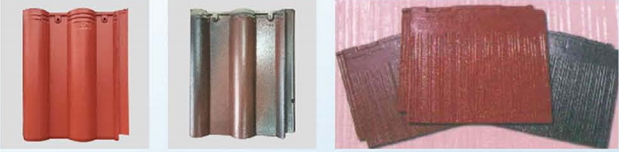
Adapted Production Products | Main tiles, ridge tiles, edge tiles, gutter tiles, and other full range of roofing accessories. | Quick mold changes enable switching between product types, making one machine multi-purpose and covering all roofing material needs. |
Standard Compatible Models | 320 and 400 models. | Flexible selection based on production scale and product specifications, highly adaptable. |
Model Type | Corresponding Forming Pressure | Matching Power | Host Weight | Core Adapted Production Scenarios |
|---|---|---|---|---|
320 Model | 120t | 9KW | 4.5t | Regular specification civil cement tiles and small factory tiles mass-produced, suitable for small and medium-sized startup factories. |
400 Model | 250t | 13KW | 5.5t | Thicker, higher-strength specialty tiles and large-scale engineering tiles mass-produced, suitable for professional tile enterprises with certain scale. |
Application Scenarios
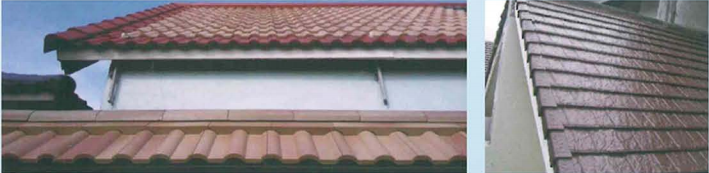
Mass production projects of self-built sloped roof cement tiles for urban and rural residences.
Processing of concrete roof tiles specifically for industrial parks and steel-framed factories.
Custom production of roof tiles for cultural tourism landscapes and imitation ancient buildings.
Recycling production of cement tiles using fly ash and sand-gravel waste resources.
Manufacturing of high-strength, weather-resistant, thickened special roof tiles for building roofs.
Front-end filter-press forming operations supporting fully automated complete cement tile production lines.
Solving Industry Pain Points
Addressing the quality pain points of traditional vibration-formed cement tiles—porous, prone to cracking and chalking, susceptible to weathering and fading, and short-lived.
Overcoming the challenges of older forming machines—large pressure shocks, excessive tile deformation, poor dimensional accuracy, and high defect rates in finished products.
Eliminating the operational bottleneck of needing multiple machines for different types of roof tiles, occupying large spaces, and facing high equipment procurement costs.
Solving the issue of high energy consumption in commercial tile machines, significant wear-and-tear on maintenance parts, and persistently high electricity and maintenance costs over long-term production.
Resolving the limitation of ordinary tile machines being unable to utilize fly ash industrial additives, leading to higher raw material costs.
Core Product Value
The QSD-A series cement tile forming machine brings lasting production value to roofing material processing plants:
It allows mixing in fly ash industrial additives, reducing raw material costs for sand and cement, thus lowering per-tile production expenses and increasing profit margins.
Finished products formed under high pressure are frost-resistant, weatherproof, and less likely to crack or deform, commanding higher selling prices and opening up opportunities for high-end roofing project orders, expanding order channels.
With a single machine and quick mold changes, it can produce the full range of roofing accessories, eliminating the need to purchase multiple machines and reducing land use and infrastructure investment.
Models are energy-efficient, have low failure rates, and feature easily replaceable consumables, minimizing downtime for maintenance and boosting annual effective production time.
Suitable for both small and large-scale factory production, balancing the needs of startups handling small batches with those of large factories pursuing mass production, demonstrating strong adaptability and high return on investment.
Common Questions FAQ
Q1: How many models does the QSD-A cement tile forming machine come in?
A: Two main models—the 320 and 400—paired with 120-ton and 250-ton forming pressures respectively, selectable according to needs.
Q2: Can the equipment produce various styles of roof tiles?
A: Yes, with quick mold changes, a single machine can produce main tiles, ridge tiles, edge tiles, gutter tiles, and other full range of roofing accessories.
Q3: What are the advantages of high-pressure filter-press molding compared to traditional vibration forming?
A: Tile blanks achieve higher density and precision, with finished products resistant to cracking, chalking, and deformation, exhibiting superior waterproofing, frost resistance, and weather durability compared to vibration-formed cement tiles.
Q4: What is the equipment’s production capacity per minute?
A: Standard forming capacity remains steady at 7–8 tiles per minute, with a consistent production rhythm suitable for small and medium-sized factories handling bulk shipments.
Q5: Can fly ash be used as an auxiliary material in production?
A: Yes, it supports blending with fly ash industrial additives, broadening raw material compatibility, enabling waste utilization, and reducing production costs.
Related Products


 Home
Home Tel Consultation
 TOP
TOP