


Fully automatic production line for semi-dry gypsum blocks
Fully automatic production line for semi-dry gypsum blocks
Other equipment
- Product Details
Equipment Features
This equipment features a unique design, simple operation, a small footprint, fast production speed, and high output. Its scientifically sound and well-optimized production process serves as an alternative to gypsum block production using the casting method, with product performance metrics surpassing those of cast products.
It boasts a distinctive mixing mode, intelligent water addition via secondary atomization, an accurate material distribution system, coordinated compression ratio and pressure settings, smart electrical control with one-touch start-up, quiet high-pressure operation, no need for drying, and AI-powered palletizing and brick collection.
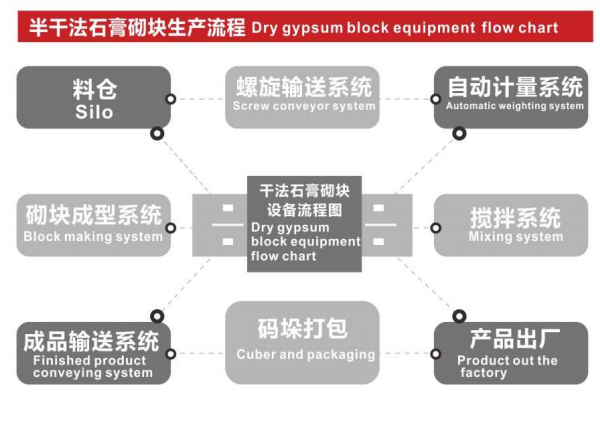
Analysis and Comparison Between Semi-Dry Formed Gypsum Blocks and Traditional Phosphogypsum Blocks
Traditionally, phosphogypsum blocks are produced using the casting method. This approach results in a high water-to-cement ratio, long drying cycles, and higher costs, which hinder large-scale, continuous production of gypsum products. It also fails to meet the demands of construction projects and cannot accommodate the bulk utilization of industrial by-product phosphogypsum. Although cast gypsum hardens to a relatively light density, it suffers from long drying times, low hardness, poor strength, high handling breakage rates, and limited market acceptance. These factors severely constrain the development of phosphogypsum-based building materials, leading to low overall resource utilization and reduced economic benefits for related industries. Therefore, reducing the water-to-cement ratio, cutting drying costs, shortening production cycles, enhancing product strength and quality, and expanding market acceptance have long been manufacturers’ goals. In semi-dry gypsum block production, the primary raw material is construction stone, supplemented by a small amount of Qisheng’s proprietary additives. These additives fine-tune the hydration reaction and crystal nucleation of construction stone, enabling a unique forming process that leverages hydrogen bonds and crystal nuclei during hydration to boost block strength. The resulting product far exceeds the requirements of the JC/T698-2010 standard for gypsum blocks. The key to semi-dry gypsum technology lies in lowering the water-to-cement ratio of stone-based blocks to around 30%. This intensifies the hydration reaction compared to traditional casting methods, raising temperatures by approximately 10 degrees Celsius and effectively shortening drying times. During this process, carefully selected admixtures are added to regulate crystallization, disperse particles, and ensure complete, efficient hydration. By reducing the water-to-cement ratio through this semi-dry technique, finished gypsum products can be packed and stored or shipped without further drying or air-drying, significantly cutting both production time and costs. Meanwhile, the successful development of HF admixtures equips gypsum binders with functions such as crystal regulation, setting adjustment, dispersion, and anti-cracking, allowing precise tailoring of proportions to meet specific production and performance needs. Semi-dry gypsum products exhibit superior performance at lower costs, opening up new possibilities for stone-based applications. Their uses span various types of standard bricks, hollow bricks, composite panels, fireproof boards, and paper-faced gypsum boards. Because semi-dry technology capitalizes on the mechanism of gypsum hydration and hardening while breaking away from the conventional casting method’s reliance on excessive water, it holds great potential for future applications—including antistatic flooring core materials and other hardened gypsum products—offering broad prospects for growth.
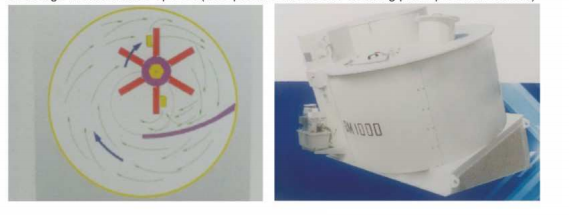
Specially Designed Mixer
This mixer incorporates German engineering, delivering smooth overall transmission, high mixing efficiency, and excellent homogeneity (eliminating dead zones). Its unique sealing system prevents material leakage, ensuring durability, easy internal cleaning, and ample maintenance space.
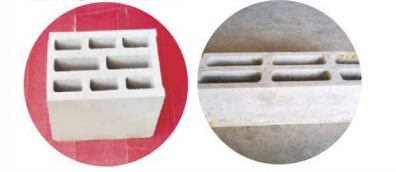
Performance Characteristics of Semi-Dry Gypsum Blocks
With a void ratio of 52%, apparent density below 760 kg/m³, fracture load exceeding 5,000 N, compressive strength above 5 MPa, and a softening coefficient greater than 0.7.
Target Customer Groups
Phosphogypsum waste recycling plants, manufacturers of new wall-building materials, producers of prefabricated partition walls, companies processing industrial by-product gypsum, suppliers of building partition materials, overseas buyers of environmentally friendly wall materials, and manufacturers supporting prefabricated construction projects.
Application Scenarios
Mass production of non-load-bearing gypsum partition walls for indoor use
Projects for recycling and reusing industrial phosphogypsum waste in chemical plant areas
Production of lightweight partition wall materials for prefabricated homes and hotel apartments
Manufacturing fire-resistant partitions and specialized fireproof gypsum boards for construction sites
Prefabricated processing of raw materials for paper-faced gypsum boards and rigid gypsum substrates
Deep-processing projects for antistatic floor core materials made of gypsum
Addressing Industry Pain Points
Resolving longstanding issues associated with traditional cast gypsum blocks, including high water-to-cement ratios, lengthy drying periods, large land footprints, and extremely high energy costs.
Overcoming challenges posed by older cast blocks—low strength, susceptibility to impact damage, significant warehousing and transportation losses, and low end-market acceptance.
Breaking through barriers preventing bulk disposal of industrial by-product phosphogypsum, addressing problems like accumulation pollution, low resource utilization rates, and mounting environmental compliance pressures.
Solving problems inherent in traditional production lines—excessive manual steps, heavy reliance on skilled workers, high labor costs across the board, and uncontrollable production capacity.
Addressing shortcomings of conventional gypsum products—poor water resistance and moisture tolerance, low softening coefficients, making them unsuitable for humid interior wall applications.
Overcoming limitations of traditional processes—lack of continuity and scalability, inability to supply large volumes for prefabricated construction projects.
Core Product Value Proposition
1. Cost Reduction: Eliminates expenses for drying, site preparation, drying equipment, and utility costs; cuts post-production operating costs by over 30%; automated production significantly reduces on-site labor, lowering long-term employment expenses.
2. Quality Enhancement: Finished products exhibit high strength, excellent impact resistance, low water absorption, and superior moisture resistance, with minimal handling and installation breakage. They command a premium price over traditional cast gypsum blocks, easily securing high-end prefabricated partition wall project contracts.
3. Environmental Benefits: Efficiently recycles industrial phosphogypsum waste, achieving high resource utilization rates, aligning with international policies promoting low-carbon manufacturing and waste management, facilitating seamless customs clearance and project acceptance overseas.
4. Production Capacity: One-touch intelligent production eliminates the need for static curing after molding, shortening the production chain and accelerating turnover, enabling year-round continuous mass production and faster capital recovery.
5. Long-Term Value: A single machine can produce multiple categories of gypsum building materials, with potential for future expansion into antistatic gypsum cores and rigid gypsum substrates, broadening business horizons and maximizing equipment reuse value.
Frequently Asked Questions (FAQ)
Q1: What are the core differences between semi-dry and cast production lines?
A: Our line operates with a water-to-cement ratio as low as 30%, higher hydration temperatures, and requires no drying or curing after molding, featuring a high degree of automation. In contrast, cast lines have higher water-to-cement ratios, necessitate prolonged drying, suffer from lower productivity, and yield products with inferior strength.
Q2: Do your finished products meet international standards for gypsum building materials?
A: All product specifications far exceed China’s national standard JC/T698-2010 for gypsum blocks, with stable physicochemical properties and compatibility with international building partition material standards.
Q3: Can your equipment process industrial phosphogypsum waste?
A: Specifically designed for recycling industrial by-product phosphogypsum, our equipment works seamlessly with dedicated additives, enabling large-scale disposal of industrial solid waste.
Q4: Is drying required after block formation?
A: No—after high-pressure molding, the blocks are directly palletized and packaged using AI, eliminating all drying and air-drying procedures.
Q5: What advantages does your accompanying mixer offer?
A: Featuring German transmission technology, it provides dead-zone-free mixing, leak-proof sealing, convenient maintenance, and uniform blending, perfectly suited for precision operations involving low water-to-cement ratios.
Related Products


 Home
Home Tel Consultation
 TOP
TOP