


QS600 Fully Automatic Unidirectional Static Pressing Brick Machine
Static Pressing Brick Machine
Hydraulic brick-making machine
- Product Details
Product Overview
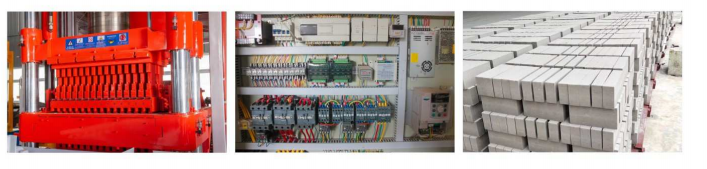
The QS600 fully automatic unidirectional static pressing brick machine is a high-performance static pressing molding equipment specially designed for small and medium-sized building materials enterprises. It adopts the unidirectional static pressing molding process, which differs from traditional vibration brick-making equipment. Relying on pure hydraulic static pressure, it compacts the raw materials under high pressure in one go, resulting in finished bricks with high density, uniform strength, and neat appearance—free of delamination or cracks—and excellent flexural and compressive performance. It is the preferred model for producing high-strength non-fired bricks, paving bricks, and plaza bricks.
The equipment highlights three core advantages: labor-saving, high density, and low noise. Hydraulic static pressing operations produce no high-frequency vibrations, ensuring low operating noise and a more environmentally friendly production environment. With a high degree of automation, it can seamlessly integrate feeding, pressing, demolding, and brick discharge processes, significantly reducing manual intervention and lowering labor costs. The machine body features a heavy-duty integral steel structure that has undergone stress-relief treatment, offering strong rigidity and high load-bearing capacity. It remains deformation-free even during prolonged high-pressure operation, with low failure rates, easy maintenance, and controllable post‑operational costs.
The equipment boasts strong adaptability, allowing flexible production of various products such as colored paving bricks, plaza bricks, solid bricks, and curbstones by simply changing molds. It is widely used in municipal roads, residential community landscaping, rural infrastructure projects, and other applications. Its broad raw material compatibility enables extensive utilization of solid waste materials like fly ash, slag, and construction debris, reducing production costs while promoting resource recycling and delivering significant green environmental benefits.
QS600 Main Technical Parameters Table
Item | Specification |
|---|---|
Model | QS600 |
Maximum Pressure | 31.5MPa |
Machine Weight | ~23 tons |
Total Power | 46.9KW |
Main Cylinder Bore Diameter | Φ450mm |
Molding Cycle | 20–25s |
Molding Area | 850×700mm |
Pallet Specification | 900×700×20mm |
QS600 Theoretical Production Capacity Table
Product Name | Dimensions (mm) | Molding Cycle | Production Capacity (bricks per mold) |
|---|---|---|---|
Colored Paving Brick | 200×100×60 | 20–25s | 16 |
Plaza Brick | 250×250×60 | 20–25s | 6 |
Solid Brick | 170×80×80 | 20–25s | 12 |
Note: The production figures are theoretical values; actual output may vary depending on raw material ratios, worker skill levels, and equipment maintenance conditions.
Core Advantages and Selling Points
Unidirectional static pressing molding delivers outstanding product quality: Utilizing a pure hydraulic unidirectional high-pressure static pressing process, it eliminates the vibration molding method. The bricks exhibit high overall density, uniform strength, and smooth, well‑formed surfaces, completely avoiding delamination and cracking defects. Their excellent flexural and compressive performance ensures full compliance with various engineering standards.
Low-noise operation for an eco‑friendly production environment: Without high-frequency vibration, the machine operates quietly, effectively improving the factory’s working environment and meeting environmental protection requirements, making it suitable for long-term continuous operation within the plant.
Full-process automation to reduce labor costs: Integrating feeding, pressing, demolding, and brick discharge into a single automated workflow, it significantly cuts down on manual steps, lowering personnel expenses and management costs.
Heavy-duty machine design for stability and ease of maintenance: The entire machine is constructed from a robust integral steel frame and undergoes stress‑relief treatment, providing exceptional structural rigidity and load‑bearing capacity. It resists deformation even under prolonged high-pressure use, features low failure rates, and allows simple routine inspections and replacement of wear parts, keeping post‑operational costs manageable.
Multi‑purpose functionality with flexible product switching: By changing molds, it can produce colored paving bricks, plaza bricks, solid bricks, curbstones, and many other types of products, covering a wide range of categories and adapting readily to diverse order requirements.
Strong raw material compatibility for green cost reduction and efficiency gains: In addition to conventional sand, gravel, and cement, it can make extensive use of fly ash, slag, construction debris, and other solid wastes, reducing raw material procurement costs while achieving resource recycling and delivering notable environmental benefits.
Target Customer Groups
Small and medium-sized building materials manufacturers, non‑fired brick processing plants, municipal road material suppliers, landscape paving brick producers, rural infrastructure material vendors, solid waste resource utilization enterprises, and overseas small and medium-sized building materials equipment purchasers.
Application Scenarios
Production of paving bricks and curbstones for municipal road projects
Manufacturing of plaza bricks and colored paving bricks for residential communities and garden landscapes
Mass production of various non‑fired bricks for rural infrastructure and new countryside development projects
Recycling construction debris, slag, fly ash, and other solid wastes into bricks
Large‑scale production of multi‑category concrete bricks at small and medium-sized building materials factories
Solving Industry Pain Points
Addressing the quality issues of traditional vibration brick machines—uneven density, susceptibility to delamination and cracking, and poor flexural and compressive performance;
Overcoming the problems of older vibration equipment—high operating noise, poor factory environment, and difficulty passing environmental inspections;
Breaking the bottleneck of traditional brickmaking processes—excessive manual involvement, large labor requirements, and persistently high labor costs;
Resolving the issue of insufficient structural rigidity in ordinary brickmaking equipment—prone to deformation under long-term high pressure, frequent breakdowns, and cumbersome maintenance;
Solving the problem of limited raw material options in some equipment—unable to utilize industrial solid waste, leading to high raw material procurement costs.
Core Product Value
The QS600 fully automatic unidirectional static pressing brick machine brings lasting production value to small and medium-sized building materials enterprises:
High-pressure static pressing technology produces high‑quality bricks with strong market acceptance, enabling the handling of various municipal, landscape, and rural infrastructure orders and expanding profit channels;
Automated operation reduces staffing needs, continuously lowers labor costs, and enhances production profitability;
Low operating noise and ability to process industrial solid waste ensure environmental compliance, facilitating smooth passage through local environmental inspections and guaranteeing stable factory operations;
Heavy‑duty machine design with low failure rates and simple maintenance reduces downtime for repairs, effectively boosting annual equipment availability;
A single machine can produce multiple mainstream brick types, eliminating the need to purchase additional equipment and saving on initial capital investment and site space.
Frequently Asked Questions (FAQ)
Q1: What forming process does the QS600 brick machine use?
A: It employs a fully automatic unidirectional hydraulic static pressing process, relying on pure high-pressure static compaction to press the raw materials in one step, unlike traditional vibration brick machines.
Q2: Which size of enterprise is this equipment suitable for?
A: Designed specifically for small and medium-sized building materials enterprises, it is ideal for small‑batch, medium‑scale production of non‑fired bricks and paving bricks.
Q3: What types of bricks can this equipment produce?
A: By changing molds, it can manufacture colored paving bricks, plaza bricks, solid bricks, curbstones, and many other concrete products.
Q4: What are the molding cycle and production capacity of this equipment?
A: The molding cycle is 20–25 seconds, with varying production capacities per mold depending on the brick type. All figures are theoretical values; actual output is influenced by multiple factors.
Q5: Can construction debris, slag, and other waste materials be used during production?
A: Yes, the equipment has broad raw material compatibility and can make extensive use of fly ash, slag, construction debris, and other solid wastes, achieving resource recycling.
Related Products


Hot Articles
- QS1500 Fully Automatic Bidirectional Static Pressing Brick Machine
- QS800 Fully Automatic Bidirectional Static Pressing Brick Machine
- QS1500 Fully Automatic Unidirectional Static Pressing Brick Machine
- QS1000 Fully Automatic Unidirectional Static Pressing Brick Machine
- QS800 Fully Automatic Unidirectional Static Pressing Brick Machine
 Home
Home Tel Consultation
 TOP
TOP