


QS1000 bidirectional static pressing brick machine, bidirectional static pressing brick machine, fully automatic brick-making machine, hydraulic static pressing brick equipment, concrete block forming
Static Pressing Brick Machine
Hydraulic brick-making machine
brick-making machine
Fully automatic bidirectional static pressing brick machine
- Product Details
Product Overview
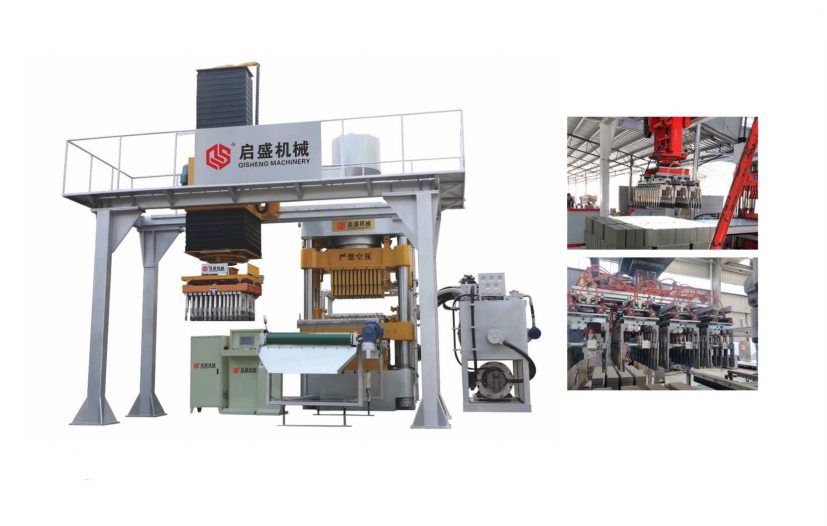
The QS1000 fully automatic bidirectional static pressing brick machine is a high-end flagship model developed by Qisheng Machinery for medium- and large-scale building materials enterprises. It employs an upper-and-lower bidirectional synchronous hydraulic static pressing forming process, relying on uniform high-pressure compaction from both directions. The finished bricks exhibit consistent density and uniform strength throughout, with no delamination, bulging, or cracking. Its flexural and compressive strength far exceeds that of traditional unidirectional pressing equipment, making it the ideal choice for large-scale production of high-strength standard bricks, hollow bricks, and solid bricks.
The equipment highlights three core advantages: labor-saving, pallet-free operation, and full automation. Bidirectional static pressing eliminates high-frequency vibrations, resulting in low operating noise and a more environmentally friendly production environment. Equipped with a PLC-based fully automatic control system, it seamlessly integrates material distribution, bidirectional pressing, demolding, and brick discharge, eliminating the need for manual pallet handling, significantly reducing human intervention, and markedly lowering labor costs. The machine features a heavy-duty integral steel structure that has undergone stress-relief aging treatment, ensuring exceptional rigidity and high load-bearing capacity. It remains deformation-free under long-term high-pressure operation, with low failure rates, easy maintenance, and controllable post-operation costs.
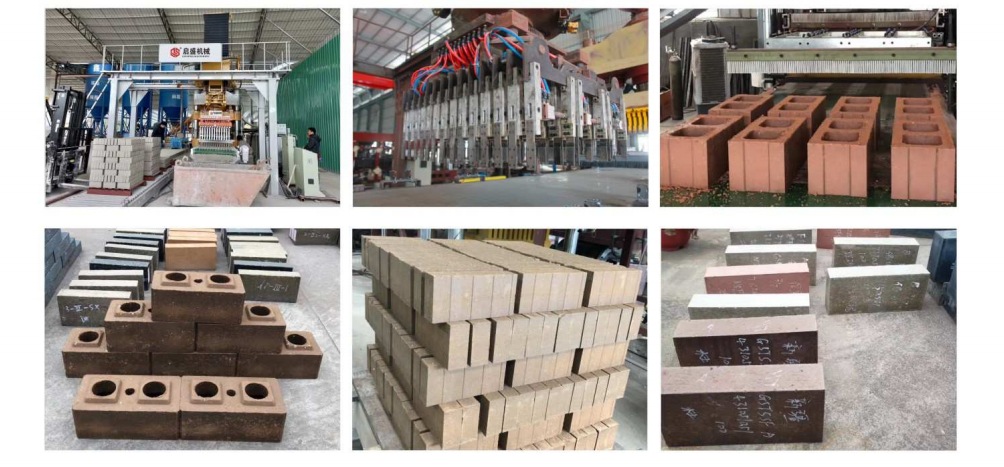
The equipment boasts excellent adaptability—by simply changing molds, it can flexibly produce various products such as standard bricks, hollow blocks, and solid bricks, widely used in municipal engineering, civil construction, rural infrastructure, and other applications. It also demonstrates broad raw material compatibility, enabling extensive utilization of industrial wastes like fly ash, slag, and construction debris, thereby reducing production costs while promoting resource recycling and delivering significant green environmental benefits.

QS1000 Main Technical Parameters Table
Item | Specification |
|---|---|
Model | QS1000 |
Maximum Pressure | 31.5MPa |
Machine Weight | ~33 tons |
Total Power | 105.4KW |
Main Cylinder Bore Diameter | Φ600mm |
Forming Cycle | 18–22s |
Forming Area | 1100×850mm |
Pallet Specification | 1200×950×20mm |
QS1000 Theoretical Production Capacity Table
Product Name | Dimensions (mm) | Forming Cycle | Production Quantity (bricks/mold) |
|---|---|---|---|
Hollow Brick | 390×190×190 | 18–22s | 10 |
Standard Brick | 240×115×51 | 18–22s | 45 |
Solid Brick | 170×80×80 | 18–22s | 36 |
Note: Production figures are theoretical values; actual output may vary depending on raw material ratios, worker skill levels, and equipment maintenance conditions.
Application Scenarios
Concrete block production for municipal infrastructure projects
Mass production of standard and solid bricks for residential wall construction
Manufacture of various building materials bricks for rural infrastructure and new countryside development
Industrial waste resource recovery and brick-making projects
Supporting large-scale non-fired brick production lines in major building materials industrial parks
Processing of hollow blocks specifically for road and landscape engineering projects
Addressing Industry Pain Points
Solves quality issues associated with traditional unidirectional brick presses, such as uneven density between top and bottom, susceptibility to delamination, bulging, and cracking, leading to low product pass rates;
Overcomes the problem of vibrating brick-making machines generating excessive noise and creating poor factory environments, failing to meet eco-friendly production standards;
Eliminates the reliance on manual placement and transfer of pallets in conventional brick-making processes, addressing high labor input and costly staffing needs;
Resolves the issue of insufficient structural rigidity in older equipment, which deforms easily under prolonged high-pressure operation, resulting in frequent breakdowns and cumbersome maintenance;
Addresses the challenge faced by some brick-making equipment that relies solely on single-source raw materials, unable to utilize construction waste, slag, and other industrial residues, thus driving up raw material costs.
Core Product Value
The QS1000 fully automatic bidirectional static pressing brick machine delivers comprehensive production value to medium- and large-scale building materials enterprises:
Its bidirectional static pressing technology produces high-quality bricks with higher market premiums, enabling access to high-end engineering projects, expanding sales channels, and enhancing market competitiveness;
With its pallet-free design and fully automated operation, it dramatically reduces the number of manual positions required, steadily cutting labor expenses over time;
Low operating noise and high utilization of industrial waste make it easy to pass environmental inspections and conduct regular production in compliance with regulations;
Its heavy-duty body ensures stability and durability, minimizing downtime due to malfunctions and maintaining high equipment availability, thus supporting large-scale continuous production;
One machine can produce multiple types of bricks, flexibly adapting to changing market demands without requiring additional equipment purchases, thereby reducing capital investment and site costs.
Frequently Asked Questions (FAQ)
Q1: What forming process does the QS1000 brick press use?
A: It employs an upper-and-lower bidirectional synchronous hydraulic static pressing forming process, applying pressure without vibration, resulting in bricks with uniform density and enhanced strength.
Q2: Does the equipment require manual placement of pallets?
A: The entire machine is designed to operate without pallets, paired with a PLC-based fully automatic control system, eliminating the need for manual pallet handling throughout the process and saving labor costs.
Q3: What types of bricks can this equipment produce?
A: By changing molds, it can manufacture hollow bricks, standard bricks, solid bricks, and many other concrete products, suitable for diverse application scenarios.
Q4: What are the forming cycle and per-mold production quantity?
A: The forming cycle ranges from 18 to 22 seconds, producing 10 hollow bricks per mold, 45 standard bricks per mold, and 36 solid bricks per mold. These figures represent theoretical production quantities.
Q5: Can construction waste, slag, and other industrial residues be used during production?
A: Yes, the equipment exhibits strong raw material compatibility, allowing substantial incorporation of fly ash, slag, construction debris, and other industrial wastes, thus achieving resource recycling.
Related Products


Hot Articles
- QS1500 Fully Automatic Bidirectional Static Pressing Brick Machine
- QS800 Fully Automatic Bidirectional Static Pressing Brick Machine
- QS1500 Fully Automatic Unidirectional Static Pressing Brick Machine
- QS1000 Fully Automatic Unidirectional Static Pressing Brick Machine
- QS800 Fully Automatic Unidirectional Static Pressing Brick Machine
 Home
Home Tel Consultation
 TOP
TOP